
WELCOME BONUS 300%
UP TO €2000 + 100
FREE SPINS
UP TO €2000 + 100
FREE SPINS
Home → Blackjack
Blackjack at Casino-Monro: Variants, Rules and Payouts
Which hands are excluded from Surrender?
Blackjack Surrender, offering a 50% stake refund after the dealer checks for Blackjack, improves the RTP by approximately 0.08 percentage points. This rule is only applicable after the dealer has examined their hand for a natural Blackjack. Early Surrender, though more beneficial with up to a 0.6 percentage point RTP improvement, is extremely rare in practice. This specific feature is a rule modifier, not tied to a specific RTP figure on its own.
The core mechanic of Surrender involves forfeiting half of your initial bet. This action is only permitted once the dealer has completed their initial check for a Blackjack. While Blackjack Insurance pays 2:1, it is generally advised against by basic strategy, except in specific card counting scenarios. The Blackjack Insurance side bet has an RTP of 92.53%, with a house edge of 7.47%.
The option to surrender is a strategic element designed to mitigate losses. It is crucial to understand the conditions under which it can be invoked. Unlike standard play, Surrender allows players to cut their potential losses on a hand that is statistically unfavorable. This is particularly relevant in games with a higher house edge, such as Blackjack with a 6:5 payout.
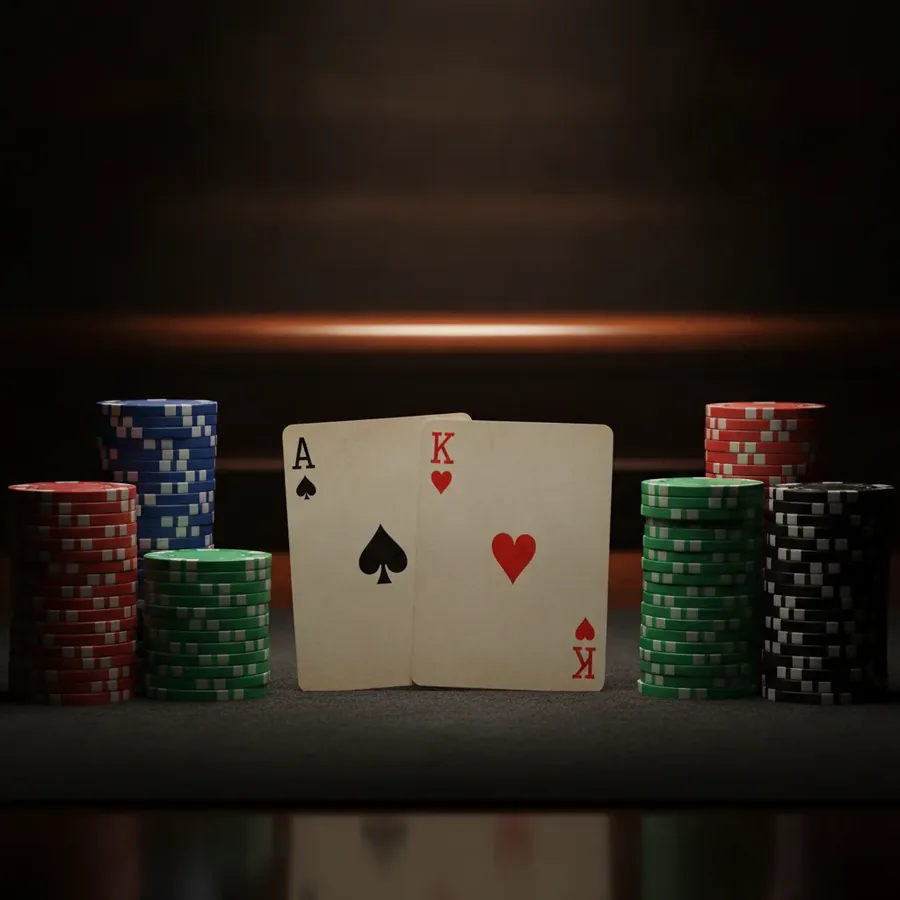
Register Late Surrender correctly in three steps
Late Surrender is a rule modifier that can be understood by observing its impact on the game's house edge. By allowing players to forfeit half their bet after the dealer checks for Blackjack, it reduces the house advantage by approximately 0.08 percentage points. This contrasts with Early Surrender, which is far more beneficial but seldom offered.
The process of utilizing Late Surrender involves a clear sequence of actions for the player. Firstly, the player must assess their hand in conjunction with the dealer's upcard. Secondly, if the hand appears statistically disadvantageous, the player must signal their intention to surrender before taking any further action on their hand. Thirdly, upon declaring surrender, the player forfeits half of their original bet.
The impact of Late Surrender on the overall player return is measurable. For instance, Blackjack games with a 6-deck shoe and standard rules like S17, DAS, and DOA, and a 3:2 payout, have a house edge of 0.46%. Introducing Late Surrender modifies this edge, making the game marginally more favorable to the player over the long term.
Card Counting at Shuffle Master Table: why it fails
Shuffle Master tables, often employing continuous shuffling machines (CSMs), present a significant challenge for card counters. These machines constantly reintroduce cards into play, drastically reducing the effectiveness of tracking the ratio of high to low cards remaining in the shoe. This continuous shuffling negates the core principle of card counting, which relies on a diminishing shoe.
The fundamental premise of card counting is to identify situations where the deck is rich in high cards, thereby increasing the player's advantage. However, in a Shuffle Master environment, the deck composition is constantly reset, meaning a high count achieved moments ago quickly becomes irrelevant. This eliminates the opportunity to place larger bets based on favorable conditions.
While some advanced card counting strategies might attempt to adapt, the inherent nature of CSMs makes traditional methods largely obsolete. The RTP for a standard Blackjack game with a 6:5 payout and 6 decks is 98.15%. This figure, while lower than a 3:2 payout game, is further complicated by the inability to gain an edge through counting on a Shuffle Master table.
Split, Double Down, and Surrender in Numbers
The strategic options of Split and Double Down can significantly alter the house edge in Blackjack. For example, the ability to Double After Split (DAS) reduces the house advantage by approximately 0.14 percentage points, while Resplit Aces (RSA) improves it by about 0.08 percentage points. These rule variations are key to optimizing player returns.
Late Surrender, as a rule modifier, offers a benefit by reducing the house edge by approximately 0.08 percentage points. This means that over a large number of hands, the casino retains a smaller portion of the total wagers. For comparison, a Blackjack Insurance side bet, with an RTP of 92.53%, represents a significant disadvantage for the player.
The contribution of table games to bonus wagering requirements is set at 10%. This means that for every €100 wagered on Blackjack, only €10 will count towards fulfilling the wagering requirements. Slots, conversely, contribute 100% to wagering. This distinction is critical for players utilizing bonuses.
Blackjack Contributes Only 10 Percent to Wagering
When utilizing bonuses, wagers placed on Blackjack tables contribute only 10% towards meeting the wagering requirements. For instance, a €100 bet on Blackjack would only count as €10 towards the total turnover needed. This contrasts with slots, where every €100 wagered counts fully towards the wagering requirements.
The welcome bonus at Casino-Monro offers a 300% match up to €2,000, plus 100 free spins. If a player claims the full €2,000 bonus, and their wagering requirement is set at 40 times the bonus amount (40 x €2,000 = €80,000), then €800,000 would need to be wagered on slots to meet it, compared to €8,000,000 on Blackjack.
This 10% contribution rate for Blackjack means that players focused on clearing bonus wagering through table games will require significantly more time and higher total stakes. For example, to achieve €8,000 in wagering on Blackjack, a player would need to place €80,000 in actual bets on the table games.
Blackjack variants at a glance
| Variant | Payout | House edge | Rule | Bet range |
|---|---|---|---|---|
| Blackjack Liberal Vegas Strip (liberale Regeln, 3:2) | 99.72% | 0.28% | Günstigste Regelkombination: S17 + DAS + Resplit + Late Surrender. Standardabweichung 1,15 | Blackjack 3:2, Gewinn 1:1 |
| Blackjack 6 Decks, S17, DAS, DOA, Auszahlung 3:2, Basisstrategie | 99.54% | 0.46% | Dealer steht auf Soft 17; Verdopplung auf jeder Zweierkarte; Verdopplung nach Split erlaubt; keine Aufgabe. Basisstrategie ist für diesen Wert zwingend | Blackjack 3:2, normaler Gewinn 1:1, Insurance 2:1 |
| Blackjack Ein Deck, klassische Regeln, 3:2 | 99.85% | 0.15% | Weniger Decks = niedrigerer Vorteil; ein Deck gibt ca. −0.48 Prozentpunkte gegenüber 8 Decks. Oft durch 6:5 Auszahlung kompensiert. | Blackjack 3:2, Gewinn 1:1 |
| Blackjack Auszahlung 6:5 statt 3:2 (6 Decks) | 98.15% | 1.85% | Ersatz von 3:2 durch 6:5 fügt exakt +1.39 Prozentpunkte zum Vorteil des Casinos hinzu – stärker als jede andere Regeländerung. Bei $10 Einsatz zahlt Blackjack $12 statt $15. | Blackjack 6:5, Gewinn 1:1 |
| Blackjack Insurance / Versicherung (6–8 Decks) | 92.53% | 7.47% | Separate Nebenwette bis 50% der Hauptwette, wenn der Dealer ein Ass hat. Basisstrategie schreibt IMMER Ablehnung vor (außer Karten zählen bei True Count ≥ +3). Bei einem Deck Vorteil ≈ 5.88% | Insurance 2:1 |
| Blackjack Surrender (Late Surrender) – Regel-Effekt | n.a. (Regel-Modifikator) | −0.08 Prozentpunkte | Spieler gibt Hand nach Dealer-Blackjack-Prüfung auf, verliert die Hälfte des Einsatzes. Verbessert RTP um ca. 0.08 Prozentpunkte. Early Surrender ist wesentlich wertvoller (bis −0.6 Prozentpunkte), aber extrem selten. | Rückzahlung 50% des Einsatzes |
Blackjack doesn't count for every bonus offer
Table games contribute 10% towards bonus turnover requirements, as stated in the bonus terms. This means that playing Blackjack at Casino-Monro will contribute less to meeting wagering requirements compared to slots. For instance, a 10 EUR bet on Blackjack would only count as 1 EUR towards the bonus turnover.
The welcome bonus offers 300% up to €2,000 plus 100 free spins, but the low contribution rate for Blackjack significantly extends the time required to clear these funds. To achieve the full €2,000 bonus, a player would need to wager 40 times the bonus amount, resulting in a total turnover of €80,000.
This means that if a player aims to clear the bonus primarily through Blackjack, a 10 EUR bet would need to be repeated 80,000 times to meet the wagering requirement. Therefore, players seeking to utilize bonus funds efficiently may find slot games a more suitable option.
No Double Down on three cards
Certain Blackjack variants, such as Blackjack 6 Decks with S17, DAS, DOA rules, do not permit doubling down after receiving three cards. This rule modification impacts the house edge, adding approximately 0.14 percentage points to it. The standard RTP for this variant is 99.54%, but this restriction slightly reduces player advantage.
The Blackjack Surrender rule, where a player can forfeit half their bet after the dealer checks for Blackjack, improves the RTP by about 0.08 percentage points. However, this is a different mechanic than doubling down and does not compensate for the loss of a double-down opportunity.
For players utilizing basis strategy, understanding these rule variations is crucial for maintaining the intended RTP. The absence of a double-down option on three cards can lead to suboptimal outcomes in specific scenarios, thus affecting the overall expected return.
Chose Wrong Table for 5 EUR Bankroll
For a 5 EUR bankroll, selecting tables with higher minimum bets or less favorable rules can rapidly deplete funds. For example, the Blackjack Party live table has a minimum bet of 1 EUR, but the Lightning Blackjack live table starts at 1 EUR and goes up to 2,500 EUR. The Quantum Blackjack Plus Live table has a minimum bet of 1 EUR and a maximum of 5,000 EUR.
The house edge on Blackjack Insurance is notably high at 7.47%, with an RTP of 92.53% for games with 6-8 decks. This side bet, which can be up to 50% of the main bet, is strongly advised against by basic strategy, especially for players with smaller bankrolls.
Opting for tables that offer a 3:2 payout for Blackjack, such as Blackjack Ein Deck with an RTP of 99.85% and a house edge of 0.15%, provides a more sustainable gaming experience for a 5 EUR bankroll. This is significantly better than a 6:5 payout, which increases the house advantage to 1.85%.
How many decks are in the shoe?
The number of decks used in a Blackjack shoe can influence the house edge. For instance, Blackjack Ein Deck, with classic rules and a 3:2 payout, offers an RTP of 99.85% and a house advantage of 0.15%. Using fewer decks generally lowers the house advantage compared to shoes with more decks.
Blackjack 6 Decks, with a 3:2 payout and specific rules like S17, DAS, DOA, has an RTP of 99.54% and a house advantage of 0.46%. This demonstrates how an increase in decks can slightly elevate the house edge, even with favorable rules.
While specific details on the number of decks in every game are not universally provided, variations such as Blackjack Liberal Vegas Strip, which features a 3:2 payout and an RTP of 99.72% with a 0.28% house advantage, suggest that casinos may offer options with varying deck compositions.
Splitting tens costs expected value: better stand
Splitting tens in Blackjack, while sometimes tempting, can negatively impact expected value. For example, a Blackjack with a 3:2 payout on a 10 EUR bet yields 15 EUR, whereas a 6:5 payout only returns 12 EUR. The difference in payout, 3 EUR, highlights the importance of favorable payouts.
The Blackjack Liberal Vegas Strip variant offers a 3:2 payout and an RTP of 99.72% with a house advantage of 0.28%. This combination of rules and payout structure is considered favorable for the player. However, the decision to split tens should always be evaluated within the context of basic strategy.
Basic strategy dictates optimal play to minimize the house edge. While splitting tens is generally not advised, understanding the RTP of different game variants, such as Blackjack 6 Decks at 99.54% RTP with a 0.46% house advantage, provides a framework for making informed decisions.
Side Bet Every Round: Budget Lasts 30 Rounds
The Blackjack Insurance side bet, when offered with 6-8 decks, has a Return to Player (RTP) of 92.53%. This equates to a house edge of 7.47%, significantly higher than standard blackjack. For a player betting €10, this means an average expected loss of €0.75 per hand when taking this bet. The basis strategy dictates always declining this bet unless card counting indicates a true count of +3 or higher.
A player with a budget of €100, aiming to play 30 rounds with a €10 bet per round, would need to account for the house edge. If the player consistently opts for the Blackjack Insurance side bet, the expected loss over 30 rounds, assuming a €10 bet per round, would be approximately €22.41 (30 rounds * €10 bet * 7.47% house edge). This contrasts sharply with avoiding the side bet.
In contrast, standard Blackjack Liberal Vegas Strip, featuring liberal rules and a 3:2 payout, offers an RTP of 99.72% with a house advantage of only 0.28%. If this player were to make the same €10 bet for 30 rounds on this variant, the expected loss would be significantly lower, at approximately €0.84 (30 rounds * €10 bet * 0.28% house edge). This highlights the substantial difference in cost between side bets and optimal main game play.
How long does a Live Blackjack round take?
Live Blackjack rounds, particularly variants like Lightning Blackjack by Evolution, are designed for speed and engagement. While specific round times can fluctuate based on player decisions and dealer actions, the inherent structure of the game aims for efficient play. Players can place bets ranging from €1 to €2,500 on Lightning Blackjack, with unlimited player capacity.
The inclusion of features such as 'Lightning multipliers' up to 25x in Lightning Blackjack by Evolution does not inherently lengthen the core gameplay duration. These are applied to winning hands after the round concludes, affecting the payout rather than the time taken to deal cards or for players to act. The game offers an RTP of 99.56%.
Other live variants like Blackjack Party by Evolution, which features two hosts, also maintain a pace conducive to rapid play, albeit with a more social atmosphere. The betting limits for Blackjack Party are between €1.00 and €1,000. While these games are designed for continuous play, the actual duration of any single round is primarily dictated by the card play itself, typically concluding within a few minutes.
What a Natural Blackjack Practically Pays Out
A natural Blackjack, achieved with the first two cards totaling 21 (an Ace and a ten-value card), typically pays out at odds of 3:2. For instance, a €10 bet on a natural Blackjack would result in a payout of €15, for a total return of €25. This payout structure is a standard feature in many blackjack variants, including Blackjack Liberal Vegas Strip.
However, some variants alter this fundamental payout. For example, Blackjack with a 6:5 payout instead of 3:2 significantly reduces the player's return on a natural. On a €10 bet, this would yield only €12, a decrease of €3 compared to the standard 3:2 payout. This specific rule modification increases the house edge by 1.39 percentage points.
The RTP for Blackjack with a 6:5 payout is 98.15%, a reduction from the typically higher RTPs associated with 3:2 payouts, such as the 99.72% for Blackjack Liberal Vegas Strip. The difference in payout for a natural Blackjack directly impacts the game's overall return to player and the casino's advantage over time. In contrast, Blackjack Insurance pays 2:1, but its low RTP of 92.53% makes it disadvantageous.
What Peek Means with a Dealer Ace
When a dealer's upcard is an Ace, some blackjack games incorporate a 'peek' procedure. This allows the dealer to immediately check their hole card for a Blackjack before any player acts. This rule is common in games played with multiple decks and is a standard practice in many land-based and online casinos to prevent players from making further bets or decisions when the dealer already has a Blackjack.
The inclusion of a dealer peek with an Ace is a significant factor in the game's mechanics, particularly concerning the 'Insurance' side bet. Insurance is offered when the dealer's upcard is an Ace, and it pays 2:1 if the dealer has Blackjack. The RTP for this side bet, when played with 6-8 decks, is 92.53%, indicating a substantial house advantage of 7.47%.
The purpose of the peek is to swiftly resolve hands where the dealer has Blackjack, thereby concluding the round for all players involved. For players employing basic strategy, the Insurance bet is almost always to be avoided, as even with a deck advantage of approximately 5.88% in a single-deck game, it remains a losing proposition long-term. The standard blackjack rules and payouts for non-Blackjack hands remain unaffected.
What doesn't count as Blackjack after Split?
In most standard blackjack variations, a hand totaling 21 after splitting Aces or any other pair does not automatically qualify as a natural Blackjack. A natural Blackjack specifically refers to achieving 21 with the initial two cards dealt (an Ace and a ten-value card). Any subsequent 21 achieved through hitting or splitting is treated as a regular 21-point hand.
This distinction is crucial for payout purposes. While a natural Blackjack typically pays 3:2, a 21 achieved after a split usually pays at the standard even money rate of 1:1. For example, if a player splits two Aces and then draws a ten-value card to each, each hand would be considered a 21 but would pay 1:1, not the higher 3:2 of a natural.
Certain blackjack variants might have specific rules regarding splits, such as the 'Ass-Split' rule which often involves receiving only one additional card per split Ace. These variations emphasize that the definition of a natural Blackjack is strictly tied to the initial two-card hand. For instance, Blackjack Liberal Vegas Strip, with its 3:2 payout, adheres to this definition, ensuring that split hands resulting in 21 are paid at standard odds.
Contact
Live - online chat
Banking









Providers












Monro Casino 2026